
Earthquake Hazard Prevention In Thailand: Shock Transmission Unit
27 May 2026
Earthquake Hazard Prevention In Thailand: Shock Transmission Unit
Introduction
Thailand has traditionally been considered a region with moderate seismic activity compared to neighboring countries. However, recent earthquakes and tremors felt across different parts of the country have increased awareness about the importance of earthquake-resistant infrastructure. Bridges, flyovers, expressways, rail corridors, and elevated structures are especially vulnerable during seismic events if they are not equipped with proper protection systems.
One of the most effective technologies used in modern bridge engineering for seismic protection is the Shock Transmission Unit (STU). These devices play a critical role in reducing structural movement during earthquakes, sudden braking forces, heavy traffic impacts, and other dynamic loads.
In this blog, we will explore earthquake hazard prevention in Thailand, the importance of seismic protection for bridges, and how Shock Transmission Units help improve infrastructure safety and durability.
Understanding Earthquake Risks in Thailand
Although Thailand is not located directly on a major tectonic plate boundary, seismic activity from nearby regions such as Myanmar, Laos, and the Andaman Sea can still affect the country. Northern and western regions of Thailand are more prone to tremors due to nearby fault lines.
In recent years, earthquakes have caused noticeable shaking in cities and raised concerns about the safety of buildings, bridges, highways, and transportation systems. As Thailand continues to invest heavily in infrastructure development, seismic-resistant engineering solutions are becoming increasingly important.
Major infrastructure projects including:
- Expressways
- Metro rail systems
- Elevated highways
- Railway bridges
- Industrial structures
- Flyovers
- Long-span bridges
must now consider earthquake hazard prevention during design and construction.
Why Seismic Protection Matters for Bridges
Bridges are designed to withstand various loads including:
- Vehicle loads
- Wind forces
- Temperature expansion
- Braking forces
- Structural vibrations
- Earthquake forces
During an earthquake, bridge decks and piers may move differently due to ground motion. Excessive movement can cause:
- Structural cracking
- Bearing failure
- Expansion joint damage
- Misalignment
- Collapse in severe cases
Traditional bridge components alone may not provide sufficient resistance against sudden dynamic loads. This is where Shock Transmission Units become extremely valuable.
What Is a Shock Transmission Unit (STU)?
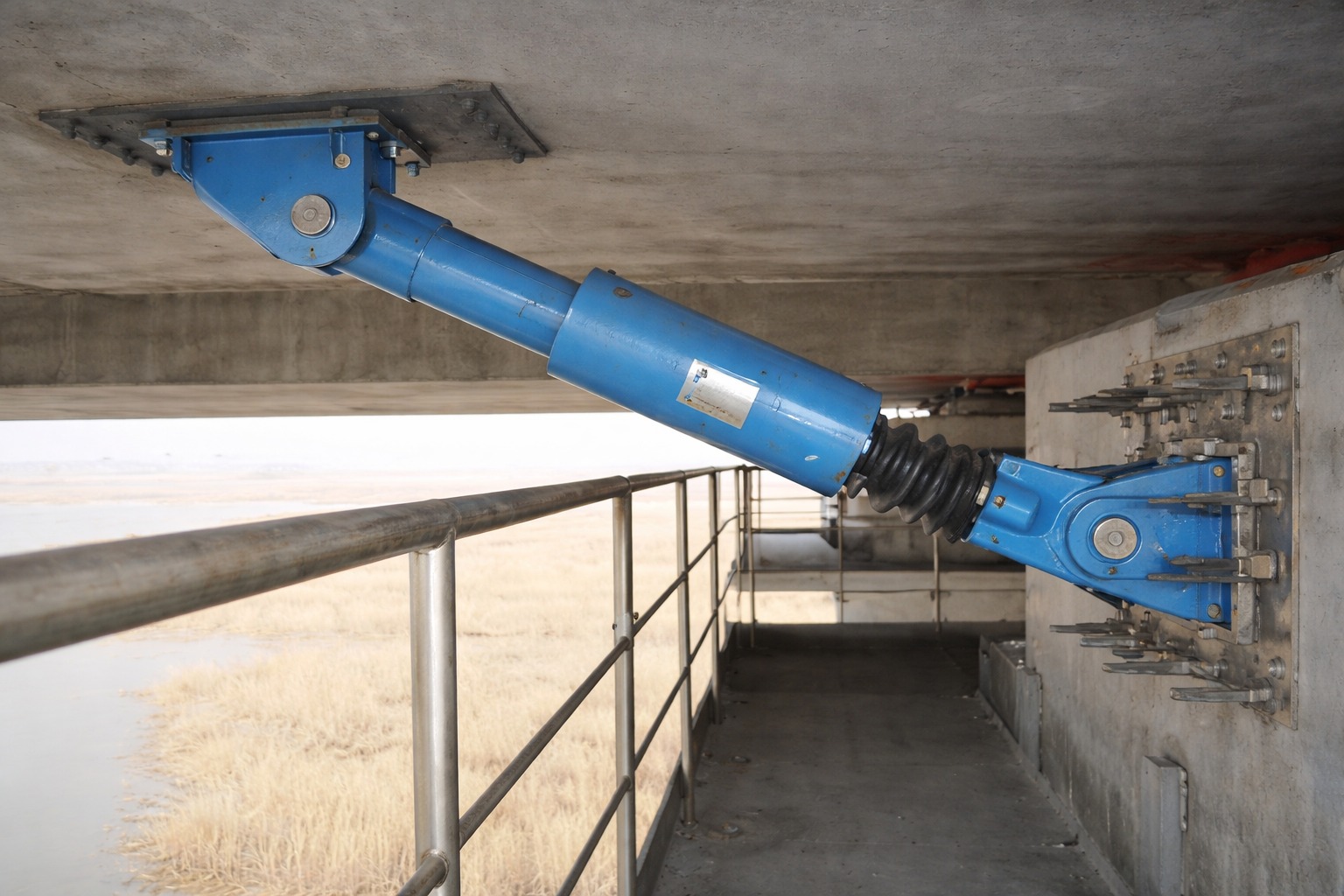
A Shock Transmission Unit (STU), also known as a Lock-Up Device (LUD), is a mechanical-hydraulic device used in bridges and heavy structures to control movement under dynamic loading conditions.
The STU allows slow movements caused by thermal expansion and contraction but locks instantly when subjected to sudden forces such as:
- Earthquakes
- Sudden braking
- Seismic shocks
- Impact loads
- High-speed dynamic movement
This locking action helps distribute forces across the structure and prevents excessive displacement.
How Shock Transmission Units Work
Under normal conditions, bridges expand and contract slowly due to temperature changes. The STU permits this slow movement without resistance.
However, during an earthquake or sudden impact:
- The movement speed increases rapidly.
- The hydraulic mechanism inside the STU reacts instantly.
- The unit temporarily locks.
- Forces are transferred safely between structural elements.
- Excessive movement is controlled.
This mechanism significantly improves bridge stability and structural safety.
Applications of Shock Transmission Units in Thailand
As Thailand expands its transportation infrastructure, Shock Transmission Units are increasingly used in:
Highway Bridges
STUs help protect long-span highway bridges from seismic and braking forces.
Metro Rail Projects
Urban transit systems require vibration and movement control for safety and durability.
Railway Bridges
Railway bridges experience dynamic loads from moving trains and seismic activity.
Elevated Expressways
STUs reduce movement and improve load transfer between piers and decks.
Industrial Structures
Large industrial plants and heavy machinery structures benefit from dynamic force protection.
Benefits of Shock Transmission Units
1. Improved Earthquake Resistance
STUs reduce structural displacement during seismic activity and improve bridge integrity.
2. Enhanced Structural Safety
They help prevent excessive movement that can damage bearings, joints, and support systems.
3. Longer Service Life
By reducing stress concentrations, STUs improve the lifespan of infrastructure.
4. Reduced Maintenance Costs
Controlled structural movement reduces wear and damage to bridge components.
5. Better Load Distribution
STUs distribute dynamic forces across multiple structural members.
Importance of STUs in Modern Infrastructure Projects
Modern infrastructure projects in Thailand are becoming larger, more complex, and more traffic-intensive. With increasing urbanization and transportation demands, bridge engineers must focus not only on load capacity but also on resilience against natural disasters.
Shock Transmission Units provide a reliable solution for:
- Seismic force management
- Structural movement control
- Dynamic load resistance
- Long-term infrastructure durability
As infrastructure standards continue evolving, STUs are becoming a standard requirement in many bridge and expressway projects.
Choosing the Right Shock Transmission Unit Supplier
When selecting Shock Transmission Units for bridge projects in Thailand, it is important to choose a manufacturer with:
- Proven engineering expertise
- High-quality materials
- Compliance with international standards
- Custom design capabilities
- Experience in bridge and infrastructure projects
- Reliable testing and quality assurance
Proper design, manufacturing, and installation are critical for ensuring long-term performance and safety.
Future of Earthquake Hazard Prevention in Thailand
Thailand’s infrastructure sector is rapidly adopting advanced engineering technologies to improve safety and resilience. Seismic protection systems such as Shock Transmission Units, seismic bearings, and expansion joints will continue playing a major role in future projects.
As climate conditions, urbanization, and infrastructure demands increase, investing in earthquake-resistant bridge technologies is essential for sustainable development.
Conclusion
Earthquake hazard prevention is becoming increasingly important for Thailand’s growing infrastructure network. Bridges and elevated structures must be designed to withstand not only daily operational loads but also sudden seismic forces.
Shock Transmission Units provide an effective and reliable solution for controlling dynamic structural movement during earthquakes and other high-impact events. By improving bridge stability, reducing structural damage, and enhancing long-term durability, STUs play a vital role in modern infrastructure safety.
For bridge engineers, contractors, infrastructure consultants, and government authorities in Thailand, investing in high-quality Shock Transmission Units is a critical step toward building safer and more resilient transportation systems.